How Do Watches Reveal the Power, Politics, and Intrigue Behind Global Headlines?
The monthly Situation Report that examines the fascinating intersection of watches, politics, intelligence, and international affairs. The past few weeks offered a reminder that watches are far more than tools for telling time. They are markers of identity, power, and even ideology – from the Rolex suite at the U.S. Open to the display cases of post-war Afghanistan. 
President Trump and the Rolex CEO at the U.S. Open
It’s not every day that the watch world collides with international politics. Yet that’s precisely what happened on September 7, when Rolex CEO Jean-Frédéric Dufour invited President Donald Trump, former Florida Attorney General Pam Bondi, and real estate developer Steve Witkoff to Rolex’s private VIP suite at Arthur Ashe Stadium during the U.S. Open men’s singles final.
What appeared to be a casual social event quickly became a talking point in both political and luxury circles. Some speculated that Dufour’s invitation was more than mere hospitality – perhaps a subtle diplomatic gesture amid Switzerland’s steep 39% export tariff on U.S.-bound goods.
By September 24, Senator Elizabeth Warren had written to Dufour, alleging that Rolex was seeking to “curry favor” with the President. Dufour’s response was classically Swiss – polite, dry, and dismissive – stating that while Trump joked about the tariffs, no policy discussions took place. The conversation, he said, was focused entirely on the match.
Still, the optics were powerful. With estimated 2024 revenues exceeding CHF 10.5 billion ($11.2 billion) – greater than the GDP of several nations – Rolex wields substantial economic influence. Even for a company of its scale, a 39% tariff is no small burden. Whether Dufour’s invitation was strategic or purely social, the event underscored an old truth: in business, as in intelligence, nothing is ever accidental. 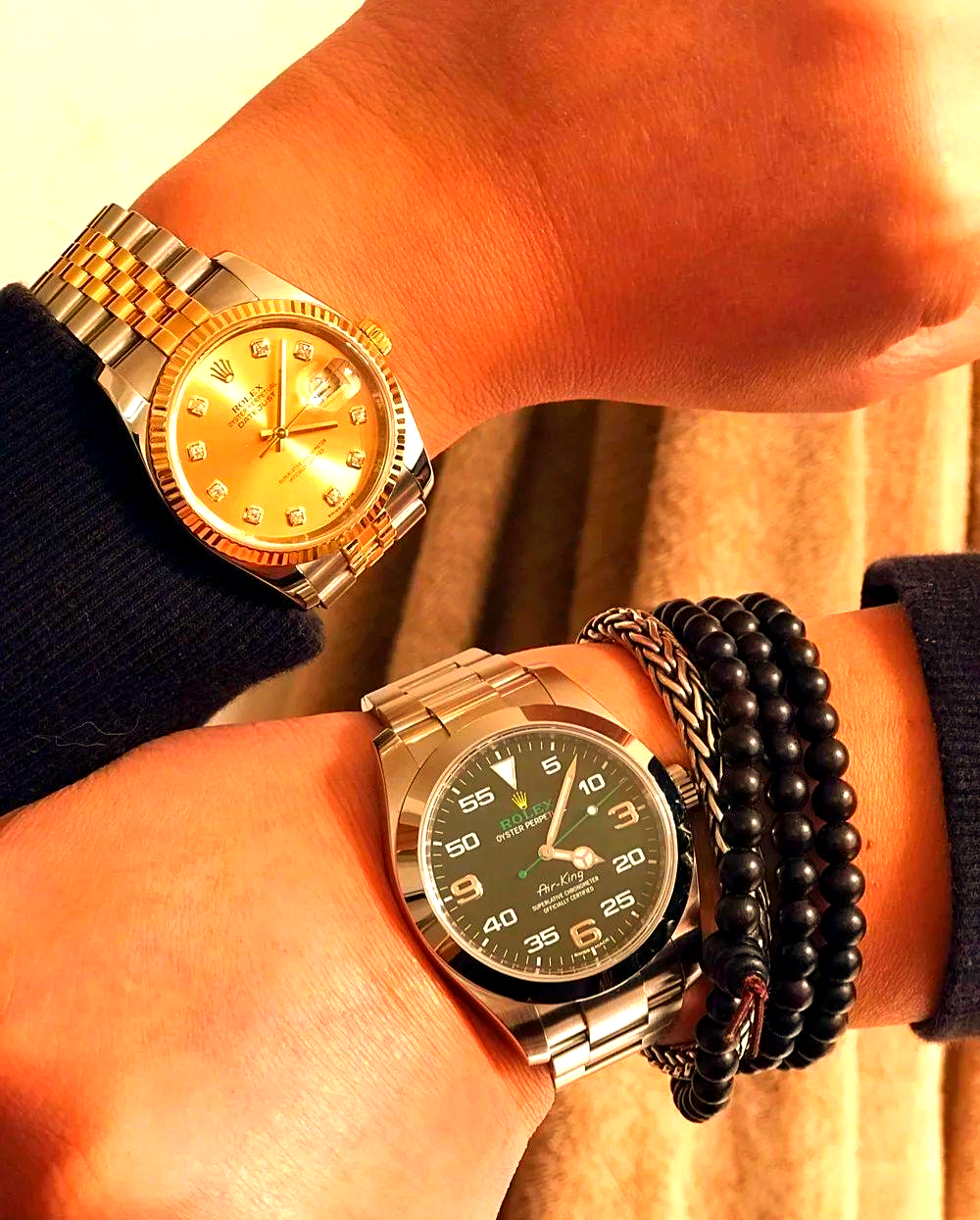
A Taliban Relic: Mullah Omar’s Casio on Display
In Afghanistan, a different kind of symbolism emerged – this time, from a humble Casio digital watch. Recently, the Casio W-86, reportedly worn by Mullah Mohammad Omar, founder of the Taliban, was displayed in a shadowbox memorial honoring him.
The W-86, a slightly upgraded version of the iconic Casio F91W, was long known as a tool of both practicality and infamy. Its reliability and precision made it a common choice in conflict zones – sometimes even as a timing device for improvised explosives. Both Omar and Osama bin Laden were known to wear Casio digital watches.
Now, decades after the Taliban’s founding, Omar’s Casio stands as a peculiar relic: a cheap, utilitarian object elevated to near-mythic status. In a postwar Afghanistan again under Taliban rule, the display of this watch symbolizes continuity, defiance, and reverence for their late leader – proof that even the simplest tools can acquire profound ideological weight.
Robert Redford: The Spy, the Screen, and the Submariner
Hollywood lost one of its great icons on September 16, when Robert Redford passed away peacefully at 89. Beyond his cinematic legacy, Redford was a quiet connoisseur of fine watches, weaving watches seamlessly into his on-screen personas.
In 1975′s Three Days of the Condor, Redford’s Doxa Sub 300T – worn on a thick leather Bund strap – became a symbol of 1970s espionage chic. In Spy Game (2001), he sported a Victorinox Swiss Army Officer’s 1884, embodying the “grey man” aesthetic of understated intelligence operatives. Off-screen, he was frequently seen wearing his personal Rolex Submariner ref. 1680, which also appeared in The Candidate (1972). In All Is Lost (2013), he wore a rugged Seiko SKX009, fitting for a man battling the sea and time itself.
For Redford, a replica watch wasn’t just an accessory – it was a character detail, an extension of the man. His legacy endures not only in film but in the subtle art of how watches can tell stories of resilience, mystery, and human spirit.
Diplomacy, Power, and the Wristwatch: A Modern Paradox
When Adam Boehler, President Trump’s Special Envoy for Hostage Response, appeared in Afghanistan this September negotiating the release of an American detainee, attention fell not only on his diplomacy but also his wrist.
In photographs with Taliban Foreign Minister Amir Khan Muttaqi, Boehler sported a Patek Philippe Aquanaut on a nylon strap – worn upside down. Earlier in the year, he was seen with a Rolex GMT-Master II, also inverted on his wrist. Whether this was a tactical choice or a personal quirk remains unclear, but in an environment where every gesture carries meaning, even a watch’s position becomes a conversation piece.
A few days later, Syrian President Ahmad al-Sharaa (al-Jolani) – once a militant commander, now a head of state – addressed the United Nations wearing a Patek Philippe World Time Chronograph 5930G, valued at over $80,000. The transformation was striking. Gone were the fatigues and field watches of wartime; in their place stood a man in tailored suits, signaling legitimacy through luxury.
In late September, six suspects stormed a Rolex boutique on Chicago’s Magnificent Mile, smashing glass cases with hammers and stealing five watches worth $170,500. After a chaotic car chase, four of the five pieces were recovered. The thieves, however, demonstrated more enthusiasm than skill – six men, five watches, one swift arrest. 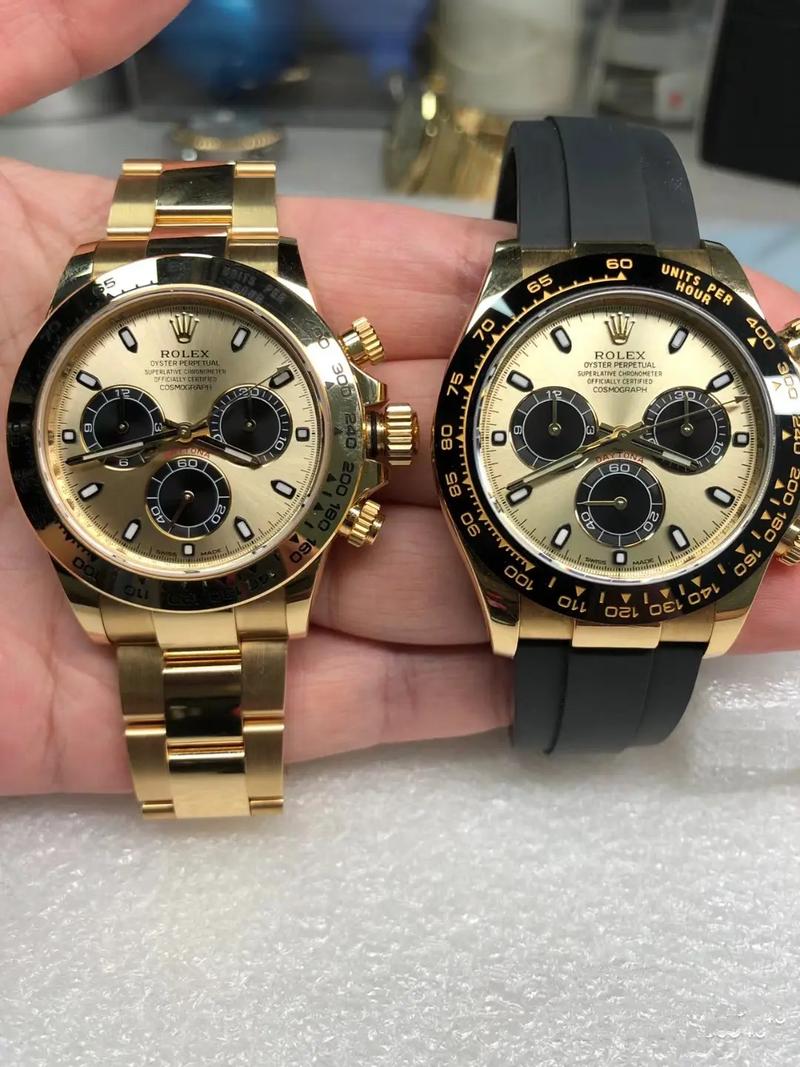
Meanwhile, in California, authorities indicted seven suspects in connection with the 2022 Brink’s armored truck heist, one of the largest jewelry robberies in U.S. history. The thieves made off with nearly $100 million in gold, gems, and watches after following the truck for 300 miles. Their capture this year marks a belated but welcome end to a heist that shuttered several jewelry businesses and strained insurance giants alike.
Miami’s “Bad Date Bandit” and the Perils of Luxury
Finally, no SITREP would be complete without a dash of scandal. In Miami’s Brickell district, Angelina Chenel Esty, dubbed the “Bad Date Bandit”, was arrested for allegedly drugging two men and stealing a Rolex, $4,000 in cash, and a replica watch. Her arrest revealed a pattern: Esty had previously targeted another victim, stealing a $20,000 Rolex Datejust and a diamond bracelet.
Her story serves as a reminder that luxury often attracts danger – and that sometimes, discretion is the best protection. In other words: leave the Rolex at home. No one’s ever been drugged over a Seiko.
More Than Time: The Symbolism of the Wristwatch
From a dictator’s Casio to a diplomat’s Patek Philippe, from Chicago’s shattered glass to Hollywood’s silver screen, September illustrated a profound truth: watches are reflections of humanity itself – ambition, vanity, faith, and folly all measured in minutes and hours.